CryptoTaxAudit Is the Last Crypto Firm Still Talking to the IRS
By Clinton Donnelly, LLM, EA | CEO & Founder, CryptoTaxAudit
In May 2026, Clinton Donnelly attended the annual CERCA conference, the industry group that works directly with the IRS on electronic tax communications.
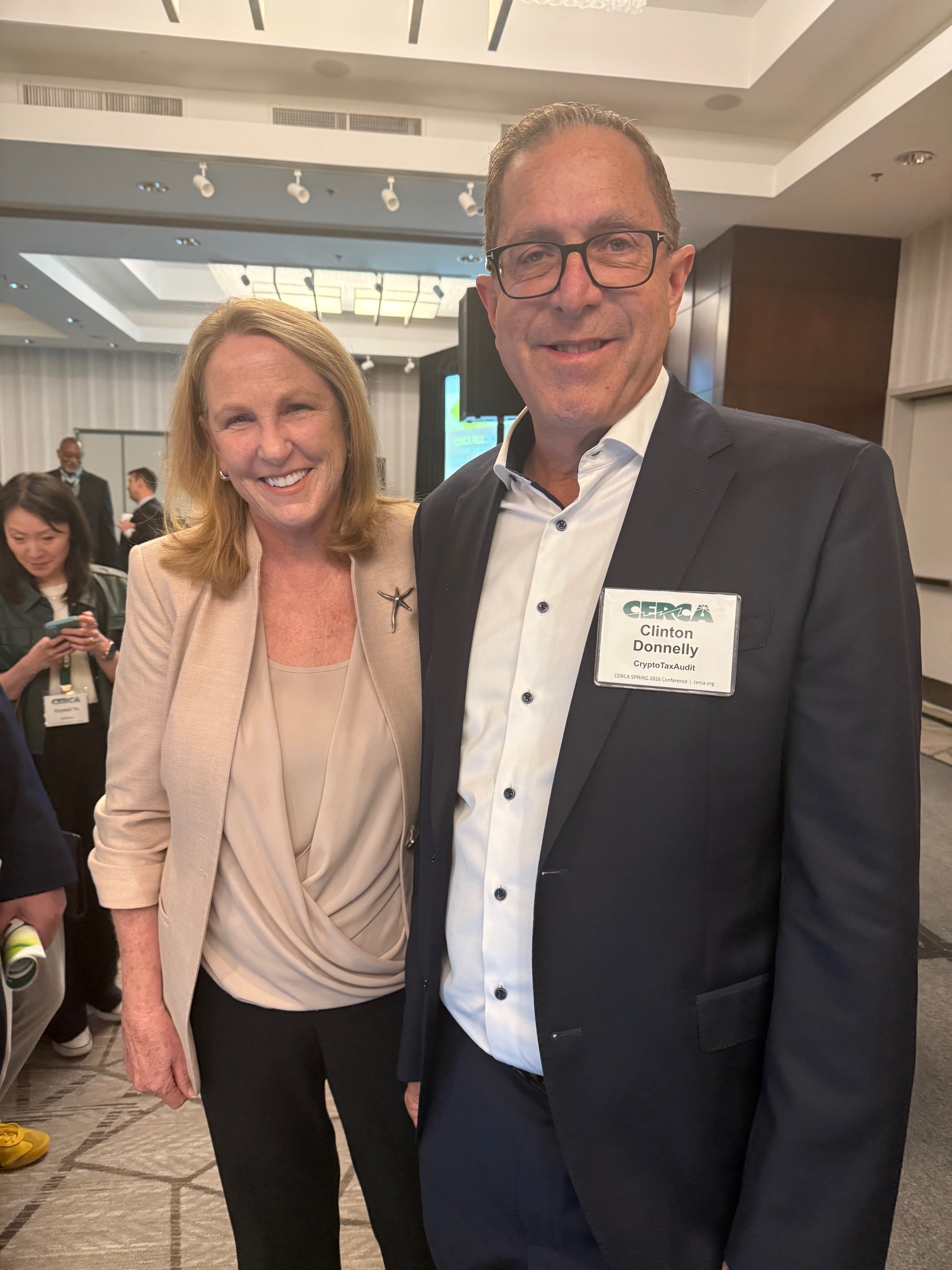
He was the only representative from any crypto-related firm in the room.
The gain calculation companies that used to show up, CoinTracker, TaxBit, and others, are gone. They've stopped engaging with the IRS at the policy level. That means no one is pushing the IRS to fix the 1099-DA. No one is raising the issues crypto taxpayers faced this filing season. No one, except CryptoTaxAudit.
Here is what was discussed at CERCA, what the IRS shared, and why it matters for every crypto taxpayer in the U.S.
Key Takeaways
The crypto industry has stopped engaging with the IRS. CryptoTaxAudit is now the only crypto-related firm participating in CERCA, the industry group that shapes how the IRS communicates electronically with taxpayers and practitioners.
The 1099-DA rollout had serious problems. The form was confusing, generated more pages than most tax returns, and departed significantly from standard 1099 formats. These issues need to be addressed through the CERCA process, but no one else from the crypto space is at the table.
The IRS is actively modernizing. IRS Commissioner Frank Bisignano and Secretary Bessent are driving a major technology overhaul, including AI tools to analyze returns as they are filed and to generate COBOL code for legacy systems.
The IRS is hiring and fast. Roughly 4,500 new customer service employees are being brought on board this summer to support next year's filing season.
The IRS considers 2025 a successful filing season. Despite cutting 25% of its workforce and rolling out Schedule 1A under the One Big Beautiful Bill, the IRS processed returns with fewer administrative problems than prior years.
What Is CERCA and Why It Matters
CERCA (the Council for Electronic Revenue Communication Advancement) is a focused industry group that works directly with the IRS on electronic communication standards. About 80 companies participate. The topics covered include e-filing systems, electronic access to IRS records, audit response procedures, the appeals process, and taxpayer-facing notices.
This is not a lobbying group. It is a working group. When something in the IRS's electronic infrastructure needs to change, like the format of a tax form, CERCA is the channel through which the industry raises those concerns and pushes for fixes.
CryptoTaxAudit has been a CERCA member since 2023. In prior years, representatives from crypto gain calculation platforms also attended. As of 2026, those companies have stepped back entirely.
The 1099-DA Problem No One Is Solving
The 1099-DA is the new IRS form that brokers use to report digital asset transactions. It debuted in the 2025 tax year. For many crypto holders, it was a shock.
The form was longer than standard 1099s, in some cases, more pages than the taxpayer's entire return. It departed significantly from the format of other 1099 forms. It was confusing to read and, in many cases, frightening to receive without context.
The CERCA conference is the correct venue to flag these problems and push for format changes. But at the 2026 meeting, Clinton Donnelly was the only person in the room who understood what the 1099-DA had done to crypto taxpayers. Without others from the crypto space at the table, the feedback loop between the crypto community and the IRS on this issue is effectively broken.
The form needs work. The CERCA process exists to do that work. But it requires practitioners who understand the crypto-specific issues to show up and make the case.
Who Was at the CERCA Conference in 2026
The 2026 CERCA conference drew senior leadership from across the IRS, not just staff-level representatives.
Frank Bisignano, the Commissioner of the IRS, addressed the group in person. Erin Collins, the National Taxpayer Advocate, also attended and spoke. Directors from multiple IRS departments participated, some in person and some via Zoom.
This level of access is significant. The IRS is highly guarded in how it interacts with the private sector. CERCA is one of the few channels where the industry can speak directly with IRS leadership about systemic issues. The fact that senior leaders attend and engage is a sign that the IRS takes this group seriously.
CryptoTaxAudit has attended every year since 2023. This year, Clinton attended personally. In 2025, Kent and Sarah represented the firm.
What the IRS Told the Industry
Several updates from the conference are directly relevant to crypto taxpayers and tax professionals.
Customer service hiring. The IRS is bringing on approximately 4,500 new customer service employees this summer. These hires will spend months in training before they are ready to assist with the 2025 tax return season. The IRS is preparing for higher call volume.
Filing season went well from an administrative standpoint. The IRS reported that the 2025 filing season was smooth operationally. That is notable given two major complicating factors: the IRS had reduced its workforce by 25%, and the One Big Beautiful Bill introduced Schedule 1A, a new form rolled out mid-cycle. Tax software absorbed the changes, and processing ran without major administrative disruptions.
That assessment is from the IRS's point of view. Taxpayers had a different experience, particularly crypto taxpayers dealing with confusing 1099-DA forms and new reporting requirements.
Refund processing is fast. The IRS is currently issuing refund checks within a few days of return processing, reflecting the automation improvements made in recent years.
How the IRS Is Using AI Right Now
IRS Commissioner Frank Bisignano and Secretary Bessent are driving a significant modernization effort at the agency. Artificial intelligence is a central part of it.
The IRS is using AI in several specific ways:
Return analysis. As tax returns are filed, AI tools are being used to flag basic issues and inconsistencies. This is automated review running in parallel with processing, not human auditors reviewing every return, but AI systems identifying patterns.
COBOL code generation. The IRS still runs much of its infrastructure on COBOL, a programming language dating to the 1960s. The IRS now uses AI to generate new COBOL code, allowing it to update legacy systems without requiring rare COBOL developers. This is a practical solution to a real operational constraint.
Customer support improvement. AI tools are being applied to help IRS phone support staff resolve issues more quickly. The goal is to reduce wait times and improve the quality of responses when taxpayers call.
This is a genuine modernization effort. The IRS is not just talking about technology. It is deploying it on real operational problems.
Why the Crypto Industry's Exit from CERCA Is a Problem
The gain calculation companies that used to attend CERCA, CoinTracker, TaxBit, and others, stopped showing up. As of the 2026 conference, none of them were represented.
That absence has consequences. The 1099-DA has real problems that need to be fixed at the form design level. The CERCA process is how that happens. With no one from the crypto industry present except CryptoTaxAudit, there is no industry voice making the case for crypto-specific reforms.
It also means that IRS leadership heard from practitioners in every area of tax compliance except crypto, at a moment when crypto reporting is one of the most significant areas of change in the entire tax system.
CryptoTaxAudit will continue to participate. But one firm cannot substitute for the broader crypto industry. The absence of others creates a gap that affects every crypto taxpayer in the country.
Frequently Asked Questions About CERCA and 1099-DA
Q: What is CERCA?
A: CERCA stands for the Council for Electronic Revenue Communication Advancement. It is an industry working group of approximately 80 companies that collaborates with the IRS on electronic tax communication standards. Topics include e-filing systems, IRS electronic records access, audit response procedures, and taxpayer notices.
Q: Is CryptoTaxAudit the only crypto firm at CERCA?
A: As of the 2026 conference, yes. CryptoTaxAudit has been a CERCA member since 2023. Gain calculation platforms like CoinTracker and TaxBit previously attended but are no longer participating.
Q: What was wrong with the 1099-DA this year?
A: The 1099-DA debuted in the 2025 tax year and generated widespread confusion. Many taxpayers received forms that were longer than their entire tax return. The format differed significantly from other 1099 forms. The issues are solvable, but they require industry feedback through the CERCA process to reach the IRS.
Q: Is the IRS really using AI to review tax returns?
A: Yes. As of 2026, the IRS is using AI tools to analyze returns as they are filed, flagging basic issues and inconsistencies. The IRS is also using AI to generate COBOL code to update its legacy systems and improve customer service response quality.
Q: How many people does the IRS plan to hire?
A: The IRS plans to hire approximately 4,500 new customer service employees over the summer of 2026. These hires will be trained over several months before supporting the next filing season.
Q: Did the IRS say anything about crypto audits at CERCA?
A: The 2026 conference did not surface specific updates on crypto audit activity. The absence of other crypto firms at the table means that crypto-specific enforcement issues received limited attention.
Q: What is Schedule 1A?
A: Schedule 1A is a new tax form introduced under the One Big Beautiful Bill. It was rolled out for the 2025 filing season. The IRS reported that tax software absorbed the change without major processing problems.
Q: Should I be concerned if I received a 1099-DA?
A: A 1099-DA is not a notice or an audit trigger on its own. It is a reporting form. However, the information on it is shared with the IRS, so your return needs to be consistent with what the form reports. If your 1099-DA looks wrong or reports transactions incorrectly, that is worth addressing before filing. A consultation with a crypto tax specialist can help clarify your situation. Book a consultation with CryptoTaxAudit.
Related article: IRS Form 1099-DA: Complete Guide for Crypto Traders (2026)
About CryptoTaxAudit: Founded in 2015 by Clinton Donnelly (LLM, EA), CryptoTaxAudit specializes exclusively in cryptocurrency tax preparation and IRS audit defense. Clinton holds an advanced law degree in international financial planning, federal Enrolled Agent status, and the Certified Cryptoasset Anti-Financial Crime Specialist credential from ACAMS. The firm has filed more than 5,000 crypto tax returns, defended clients in over 50 IRS audits, and represented five traders in U.S. Tax Court. CryptoTaxAudit serves clients across 71 countries, was named Cryptocurrency Taxation Services of the Year 2025 by Financial Services Review, and is the only crypto-focused firm currently participating in CERCA.
Author